

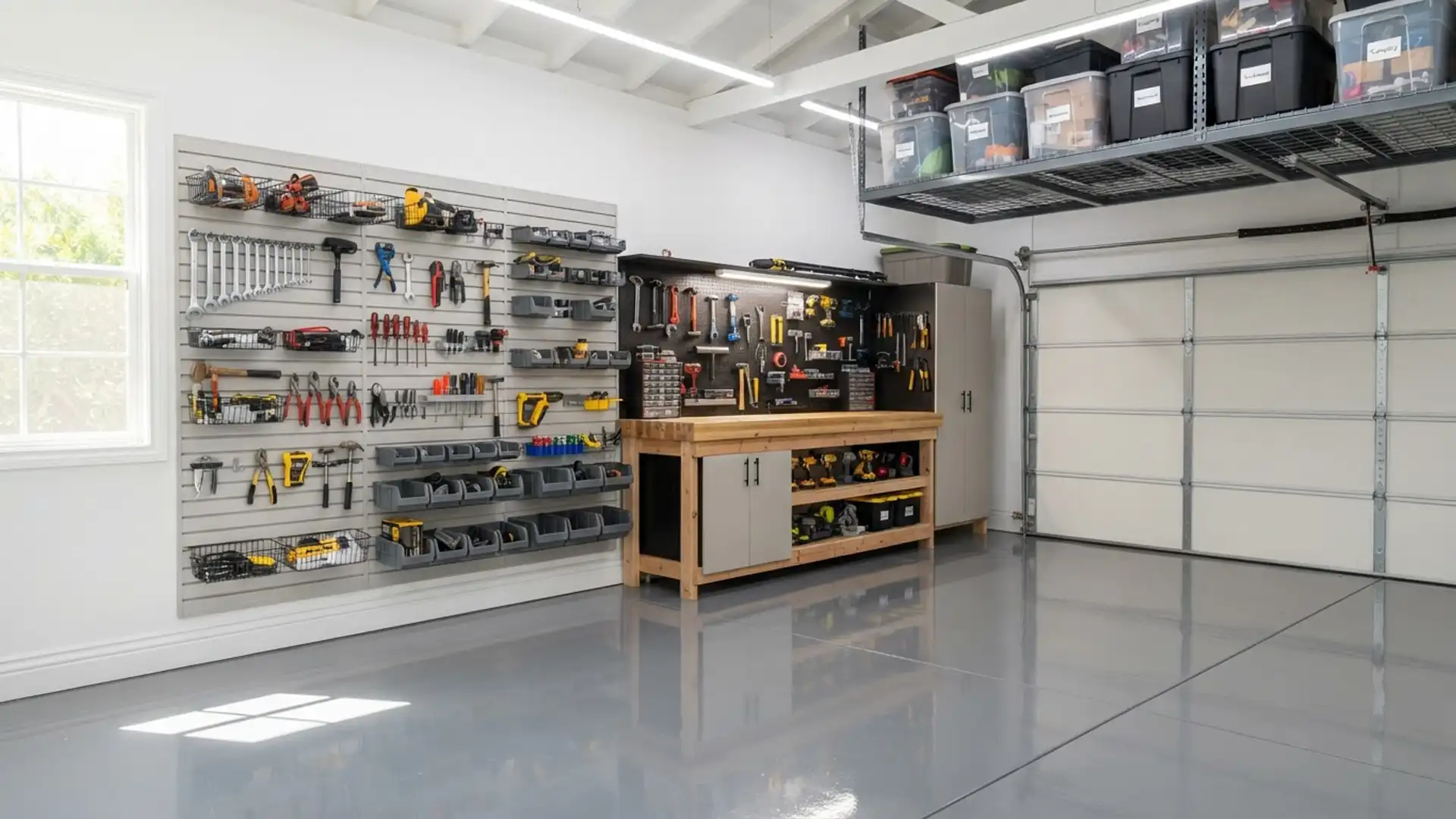
A garage remodel upgrades the space you already have — better floors, storage, lighting, and climate — while it stays a garage, workshop, or hobby space rather than a living unit. This guide covers what goes into a remodel, the best flooring options, smart storage, and when the work needs a permit in LA. (If your goal is a living space or rental, see our garage-to-ADU conversion guide and garage conversion service.)
What a garage remodel includes
- Floor: epoxy, polyaspartic, interlocking PVC tile, rubber rolls, or paint.
- Walls: paint, slatwall and pegboard panels, insulation, and drywall.
- Lighting: LED fixtures, smart lighting, and added task lighting.
- Insulation: insulating the walls and the garage door.
- Storage: wall and floor cabinets, open shelving, and overhead systems.
- Work zone: a workbench, magnetic boards, and tool drawers.
Garage flooring options
- Epoxy: a glossy, durable finish that resists stains, impact, and chemicals; it can be slippery when wet, needs careful surface prep, and is best installed by a pro.
- Polyaspartic: cures very fast (usable in about 24 hours) and resists oil, chemicals, and freeze-thaw; it costs more and needs precise application.
- Interlocking PVC tiles: easy DIY, durable, and available in many designs; they can trap moisture underneath.
- Paint or sealant on concrete: the budget option; shorter-lived and not made for heavy loads.
Storage and organization
- Slatwall: panels for baskets, hooks, and shelves that can add up to about 30% more capacity without using floor space.
- Pegboard: perforated panels for quick access to hand tools at the workbench.
- Shelving: shallow open shelves (12–16 inches) keep items visible without clutter.
- Overhead storage: ceiling racks that hold up to about 600 lbs — ideal for seasonal gear.
- Cabinets: modular or custom cabinets that hide and lock away items.
- Workbench: a work surface with built-in storage, often foldable or height-adjustable.
Lighting and electrical
- LED lighting: bright, efficient fixtures at about 50–75 lumens per sq ft and 4000–5000K.
- Outlets: add outlets, including USB, over work areas.
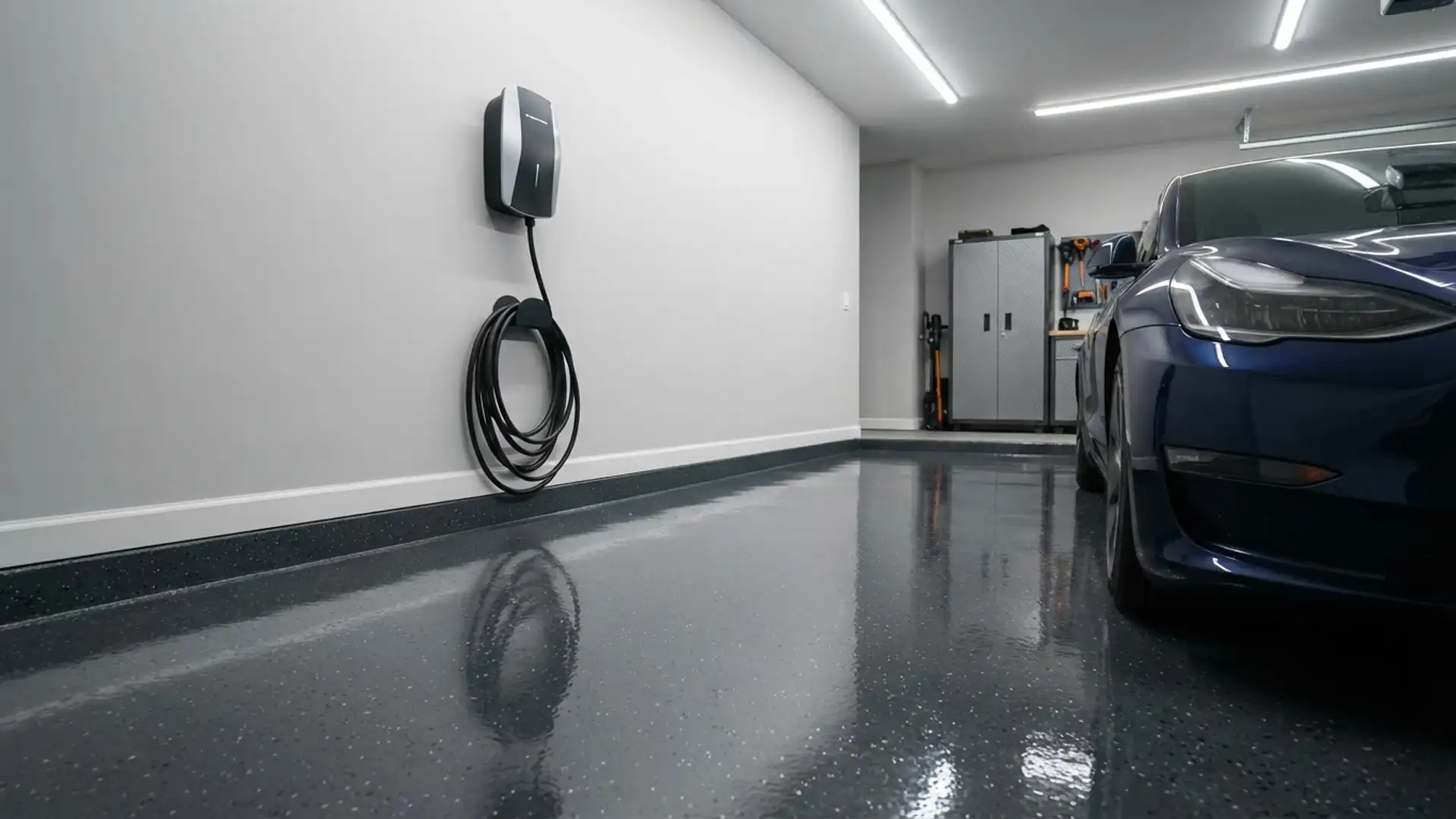
- EV charger: installation requires a panel check and often a wiring upgrade.
- Dedicated circuits: separate task and general lighting, and put power-hungry tools on their own line (e.g., 20-amp) to avoid a fire risk.
Insulation and climate
- Insulate walls and door: needed for year-round use, and it must meet fire-safety code.
- Heating/cooling: HVAC helps climate-control the space, but the garage must be separated from the house by a fire-rated door.
- Ventilation: needed to clear paint fumes, chemicals, and exhaust.
Garage door and exterior
- Replace the door: a new wood, steel, or aluminum door dramatically improves curb appeal.
- Insulated doors: improve the garage’s energy efficiency.
- Windows: add windows in the wall or order a door with windows for natural light.
- Exterior upgrades: a paver or mixed-material driveway and a convenient side door.
Popular garage remodel ideas
- Workshop: workbenches, task lighting, magnetic boards, and tool storage.
- Garage gym: compact equipment, impact-resistant rubber flooring, mirrors, and a sound system.
- Hobby or relaxation corner: comfortable furniture, a mini-fridge, a media center, and rugs.
- Storage: overhead racks and wall panels for boxes, bikes, and seasonal items.
Do you need a permit?
A permit is generally required for structural and wall changes, cutting in new windows or doors, new wiring (such as an EV charger), adding insulation and drywall (it affects fire safety), plumbing, and HVAC. A permit is generally not required for painting, wallpaper, replacing flooring, replacing an old door or windows without changing the opening size, installing cabinets, or minor repairs to existing electrical.
Insulation is the item homeowners most often get wrong: because it affects fire safety where the garage adjoins the house, insulating and drywalling typically needs a permit — confirm your project with LADBS.
Remodel your garage right
From flooring and storage to lighting, insulation, and electrical, a garage remodel is faster and safer done to code. As a licensed Class B general contractor (CSLB #1148495), Kobzev Pro handles the build and any permits. Final permit requirements and approvals are set by LADBS.
Based in Van Nuys, in the heart of the San Fernando Valley, Kobzev Pro serves Los Angeles — including Sherman Oaks, Studio City, Encino, and Woodland Hills — and Southern California. We travel up to about 150 miles for the right project, including Ventura, Santa Barbara, Orange County, and the Inland Empire.
Book a free on-site visit to plan your garage remodel — or get an instant number with our ADU cost calculator. Licensed general contractor, CSLB #1148495.
Frequently asked questions
What flooring should I choose for my garage?
It depends on use: epoxy for a durable glossy finish, polyaspartic for a fast cure and chemical resistance, interlocking PVC tiles for an easy DIY, or painted/sealed concrete on a budget.
Do I need a permit to remodel my garage?
Yes for structural or wall changes, resizing window or door openings, new wiring (like an EV charger), adding insulation and drywall, plumbing, or HVAC. No for paint, flooring, cabinets, replacing a door without resizing the opening, or minor electrical repairs.
How do I get the most storage out of the walls?
Slatwall panels can add up to about 30% more capacity without using floor space; pegboard keeps hand tools handy; shallow 12–16 inch shelving keeps things visible.
How do I store seasonal or bulky items?
Overhead racks hold up to about 600 lbs and are ideal for seasonal gear; wall panels handle boxes and bikes.
Are custom garage cabinets worth it?
Modular or custom cabinets hide and lock away items — worth it if you want a clean, secure look.
Can I remodel my garage myself (DIY)?
Some parts (PVC tile flooring, pegboard, cabinets) are DIY-friendly; wiring, structural work, and anything that needs a permit should be done by a professional.
Do I need a permit to insulate and drywall the walls?
Often yes, because it affects fire safety when the garage adjoins the house. Confirm with your local building department (LADBS).
How should I light my garage?
Bright LED at about 50–75 lumens per sq ft and 4000–5000K, with separate task and general lighting.
Do I need a permit to replace the garage door?
Replacing an old door without changing the opening size generally does not need a permit; resizing the opening does.
Can I add an EV charger?
Yes, but it needs a panel check and often a wiring upgrade.